
Introduction
A healthy body needs a variety of vitamins and minerals every day to function properly. While a balanced diet remains the best source of nutrition, modern lifestyles, busy schedules, processed foods, and dietary restrictions often make it difficult to meet daily nutritional requirements. This is where multivitamins play an important role.
Multivitamins are dietary supplements that contain a combination of essential vitamins, minerals, and sometimes additional nutrients designed to support overall health. They help bridge nutritional gaps, promote energy production, strengthen immunity, and support healthy bones, skin, and brain function.
However, not all multivitamins are the same. Understanding their benefits and selecting the right one according to your needs can help you make a smart health decision.
What Is a Multivitamin?
A multivitamin is a dietary supplement that contains multiple essential nutrients in one convenient formula. These typically include:
Vitamin A
Vitamin B Complex
Vitamin C
Vitamin D
Vitamin E
Vitamin K
Calcium
Magnesium
Zinc
Iron
Selenium
Copper
Different multivitamin formulas are designed for men, women, seniors, children, athletes, and individuals with specific nutritional needs.
Why Are Multivitamins Important?
Even people who try to eat healthy may miss certain nutrients due to:
Busy lifestyles
Poor eating habits
Vegetarian or vegan diets
Food allergies
Aging
Pregnancy
Medical conditions
Increased physical activity
Multivitamins help provide essential nutrients that may not be consumed in sufficient quantities through food alone.
Benefits of Taking Multivitamins
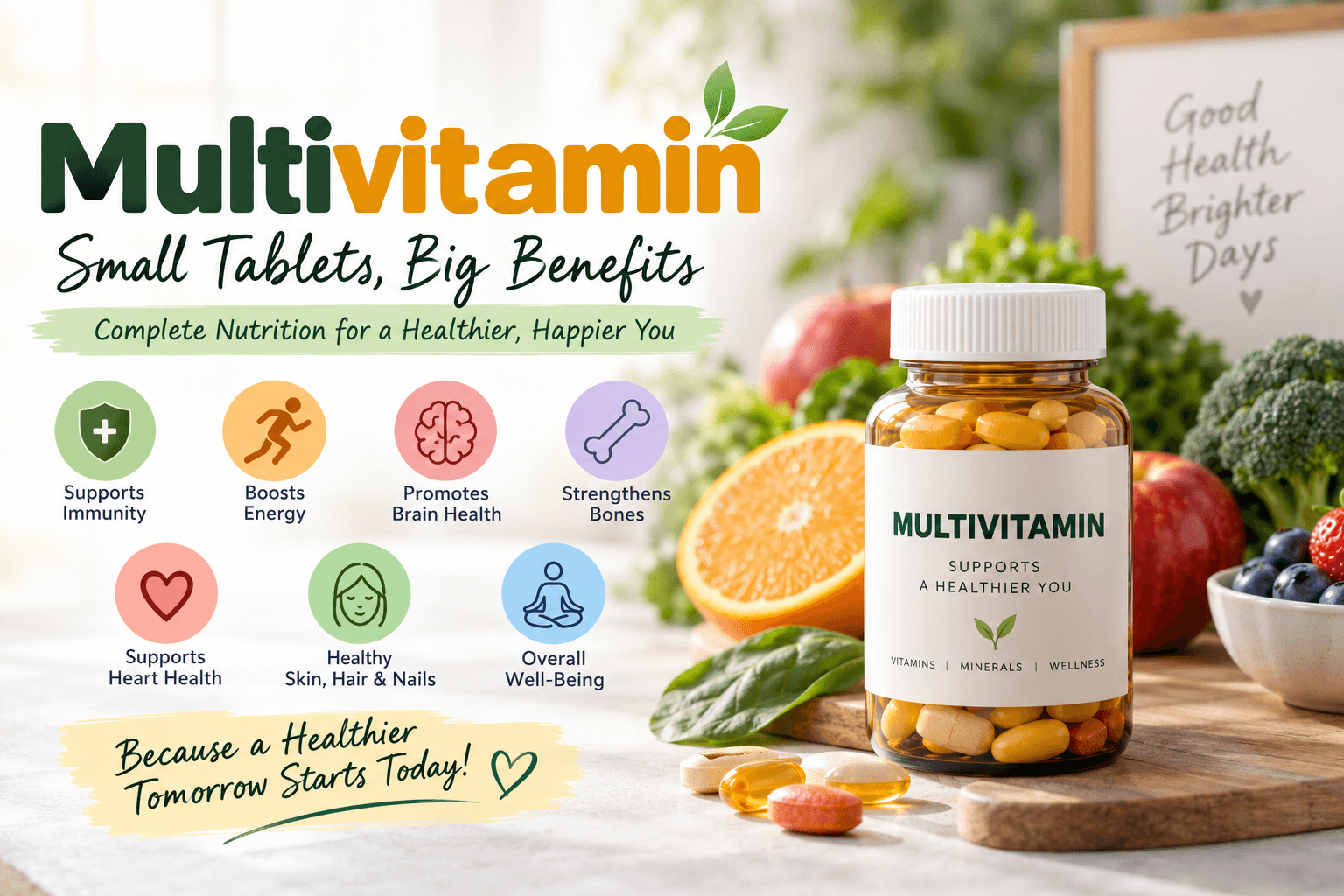
1. Supports Immune Health
A healthy immune system relies on nutrients such as Vitamin C, Vitamin D, Zinc, and Selenium. These nutrients help the body defend itself against infections and support faster recovery from illness.
2. Boosts Energy Levels
B Vitamins play a major role in converting food into energy. When your body receives enough essential vitamins, you may experience improved stamina and reduced tiredness throughout the day.
3. Promotes Brain Function
Certain vitamins like B12, Folate, and Omega-supporting nutrients help maintain healthy brain function. They contribute to better concentration, memory, and mental clarity.
4. Strengthens Bones
Calcium, Vitamin D, Magnesium, and Vitamin K work together to support strong bones and healthy joints. These nutrients are especially important for older adults and postmenopausal women.
5. Supports Heart Health
Some multivitamins include nutrients that contribute to normal heart function by supporting healthy blood circulation and maintaining normal homocysteine levels.
6. Improves Skin, Hair, and Nails
Biotin, Vitamin E, Vitamin C, and Zinc help maintain healthy skin, stronger nails, and shiny hair while supporting collagen production.
7. Helps Fill Nutritional Gaps
Even with a balanced diet, it can be difficult to consume every essential nutrient daily. Multivitamins help fill these nutritional gaps and support long-term wellness.
Who Should Consider Taking Multivitamins?
Multivitamins may be beneficial for:
Adults with busy lifestyles
Working professionals
Senior citizens
Vegetarians and vegans
Athletes
People recovering from illness
Individuals with restricted diets
Women during pregnancy (under medical supervision)
Always consult a healthcare professional before starting any supplement, especially if you have a medical condition or take prescription medications.
Key Nutrients Found in Multivitamins
Vitamin A
Supports vision, skin health, and immune function.
Vitamin B Complex
Helps convert food into energy and supports nervous system health.
Vitamin C
Acts as an antioxidant and supports collagen production and immunity.
Vitamin D
Essential for calcium absorption, strong bones, and immune health.
Vitamin E
Protects cells from oxidative stress and supports healthy skin.
Zinc
Supports wound healing, immunity, and normal metabolism.
Magnesium
Contributes to muscle function, nerve health, and energy production.
Iron
Supports healthy red blood cell formation and oxygen transport.
How to Choose the Right Multivitamin
Not every supplement is suitable for everyone. Consider these factors before choosing one.
Age
Children, adults, and seniors require different nutrient levels.
Gender
Men and women have unique nutritional requirements.
Lifestyle
Athletes or highly active individuals may need additional nutrients.
Dietary Preferences
Choose vegetarian or vegan formulations if required.
Quality
Look for trusted brands that follow quality manufacturing standards and clearly list ingredient amounts.
Best Time to Take a Multivitamin
Most multivitamins are best taken:
With breakfast or lunch
Alongside a meal containing healthy fats
At the same time every day
Taking them with food can improve nutrient absorption and reduce the chance of stomach discomfort.
Can Multivitamins Replace a Healthy Diet?
No.
Multivitamins are designed to supplement a balanced diet—not replace it. Whole foods provide fiber, antioxidants, and beneficial plant compounds that supplements cannot fully replicate.
For optimal health:
Eat plenty of fruits and vegetables.
Include whole grains.
Consume lean protein.
Stay hydrated.
Exercise regularly.
Get adequate sleep.
Possible Side Effects
Most people tolerate multivitamins well when taken as directed. However, excessive intake may cause:
Upset stomach
Nausea
Constipation
Headache
Diarrhea
Avoid taking more than the recommended dosage unless advised by your healthcare provider.
Conclusion
Multivitamins can be a valuable addition to a healthy lifestyle by helping fill nutritional gaps and supporting immunity, energy, bone strength, brain health, and overall well-being. While they are not a substitute for a balanced diet, they offer convenient nutritional support for people with increased nutrient needs or busy lifestyles.
Choosing a high-quality multivitamin and using it consistently alongside healthy eating habits and regular physical activity can contribute to long-term health and wellness.
Frequently Asked Questions (FAQs)
Q1. What is a multivitamin?
A multivitamin is a dietary supplement containing multiple essential vitamins and minerals that help support overall health and fill nutritional gaps.
Q2. Who should take a multivitamin?
Adults, seniors, vegetarians, athletes, people with nutrient deficiencies, and individuals with busy lifestyles may benefit from multivitamins.
Q3. Can I take a multivitamin every day?
Yes. Most multivitamins are formulated for daily use when taken according to the recommended dosage.
Q4. Do multivitamins improve immunity?
They can help support normal immune function by providing nutrients such as Vitamins C, D, Zinc, and Selenium.
Q5. What is the best time to take a multivitamin?
It is generally recommended to take a multivitamin with a meal, preferably breakfast or lunch, to improve nutrient absorption.
Q6. Can multivitamins replace healthy food?
No. Multivitamins supplement your diet but cannot replace the nutritional benefits of whole foods.
Q7. Are there any side effects?
When taken as directed, multivitamins are generally safe. Taking excessive amounts may lead to digestive discomfort or other unwanted effects.