
Introduction
Most people think weight gain, low energy, poor sleep, and constant fatigue are separate problems. They try to fix each issue individually dieting for fat loss, caffeine for energy, and supplements for recovery.
But the real issue often sits deeper.
It’s your hormones.
Hormones control almost everything in your body your metabolism, mood, hunger, sleep, muscle growth, and even your motivation. When your hormones are balanced, your body functions smoothly. When they are disrupted, everything starts to fall apart, often without obvious warning.
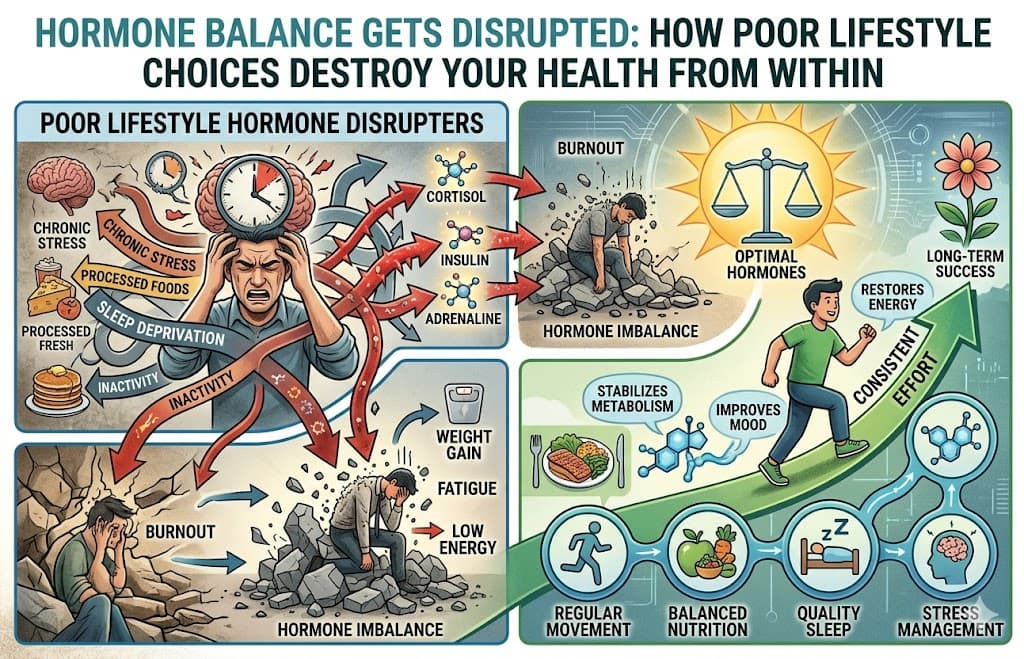
The problem is that modern lifestyle habits are quietly damaging hormonal balance every single day. Poor sleep, high stress, processed food, irregular eating patterns, and lack of physical activity create a perfect storm for hormone disruption.
And most people don’t even realize it’s happening.
Understanding Hormones and Their Role in the Body
Hormones are chemical messengers that travel through your bloodstream and tell your body what to do and when to do it. They regulate critical functions such as energy production, fat storage, muscle repair, hunger signals, and sleep cycles.
Key hormones like insulin, cortisol, testosterone, estrogen, and melatonin work together in a highly coordinated system. When one hormone goes out of balance, it affects others as well.
This is why hormone imbalance doesn’t show up as a single problem. It creates a chain reaction.
For example, poor sleep can increase cortisol levels. Elevated cortisol can reduce testosterone, increase fat storage, and disrupt insulin sensitivity. This leads to weight gain, fatigue, and poor recovery.
Everything is connected.
How Modern Lifestyle Disrupts Hormonal Balance
The human body is designed to function in a natural rhythm, often referred to as the circadian cycle. But modern habits constantly interfere with this system.
Late-night screen exposure, irregular sleep schedules, and lack of sunlight exposure disrupt melatonin production, making it harder to fall asleep and stay asleep. Poor sleep then elevates cortisol, the stress hormone, which keeps your body in a constant state of alertness.
At the same time, highly processed foods and excessive sugar intake spike insulin levels. Over time, this can lead to insulin resistance, where your body becomes less efficient at managing blood sugar.
Chronic stress adds another layer of damage. When stress becomes constant, cortisol remains elevated for long periods. This not only increases fat storage especially around the abdominal area but also suppresses other important hormones.
Physical inactivity further worsens the situation by slowing down metabolism and reducing the body’s ability to regulate hormones effectively.
The result is a system that is constantly out of sync.
The Real-World Effects of Hormone Imbalance
When hormones are disrupted, the effects show up in ways that many people misinterpret.
Unexplained weight gain is one of the most common signs. Even with controlled eating, the body may hold onto fat due to poor insulin sensitivity and elevated cortisol levels.
Energy levels drop significantly. You may feel tired even after a full night’s sleep, or rely heavily on caffeine to get through the day.
Muscle growth becomes difficult, and recovery slows down. This is often linked to reduced levels of testosterone and growth hormone.
Mood swings, irritability, and lack of motivation are also common, as hormones directly influence brain chemistry.
Sleep quality declines, creating a vicious cycle where poor sleep worsens hormonal imbalance, and hormonal imbalance further disrupts sleep.
Over time, these issues can develop into more serious health conditions, including metabolic disorders and chronic fatigue.
Why Quick Fixes Don’t Work
Most people try to fix hormone-related issues with shortcuts fat loss pills, energy boosters, or extreme diets.
These approaches rarely work because they don’t address the root cause.
Hormonal balance cannot be fixed overnight. It requires consistent, long-term changes in lifestyle habits.
Your body needs time to restore balance. Trying to force quick results often makes the situation worse by adding more stress to the system.
This is where most people fail. They expect immediate change and give up when it doesn’t happen.
The Natural Way to Restore Hormonal Balance
Restoring hormonal balance is not complicated, but it requires discipline and consistency.
Sleep is the foundation. Without proper sleep, no other strategy will work effectively. A consistent sleep schedule helps regulate cortisol and melatonin, which are critical for overall hormonal health.
Nutrition plays an equally important role. A balanced diet with adequate protein, healthy fats, and fiber supports stable blood sugar levels and reduces stress on the body. Avoiding excessive processed foods helps prevent insulin spikes and long-term resistance.
Physical activity improves hormone sensitivity and helps regulate stress levels. Regular movement, especially strength training and moderate cardio, supports better metabolism and hormone function.
Stress management is often overlooked but essential. Chronic stress is one of the biggest disruptors of hormonal balance. Reducing stress through practical methods like improving routine, limiting unnecessary pressure, and maintaining structure can significantly improve overall health.
Consistency in daily habits is what brings results. There is no shortcut around it.
The Long-Term Impact of Balanced Hormones
When your hormones are balanced, everything starts to improve naturally.
Fat loss becomes easier because your body efficiently uses energy instead of storing it. Energy levels stabilize, reducing the need for stimulants. Sleep quality improves, leading to better recovery and mental clarity.
Your mood becomes more stable, and your overall performance both physical and mental improves significantly.
This is not a temporary change. It is a long-term upgrade in how your body functions.
Conclusion
Hormone imbalance is not a small issue it is a foundational problem that affects every part of your health.
Ignoring it leads to a cycle of fatigue, weight gain, poor performance, and long-term health risks.
But the solution is not complicated. It requires understanding that your body responds to consistent habits, not extreme actions.
When you focus on improving sleep, nutrition, activity, and stress management, your hormones begin to stabilize. And when your hormones are stable, your body starts working with you instead of against you.