
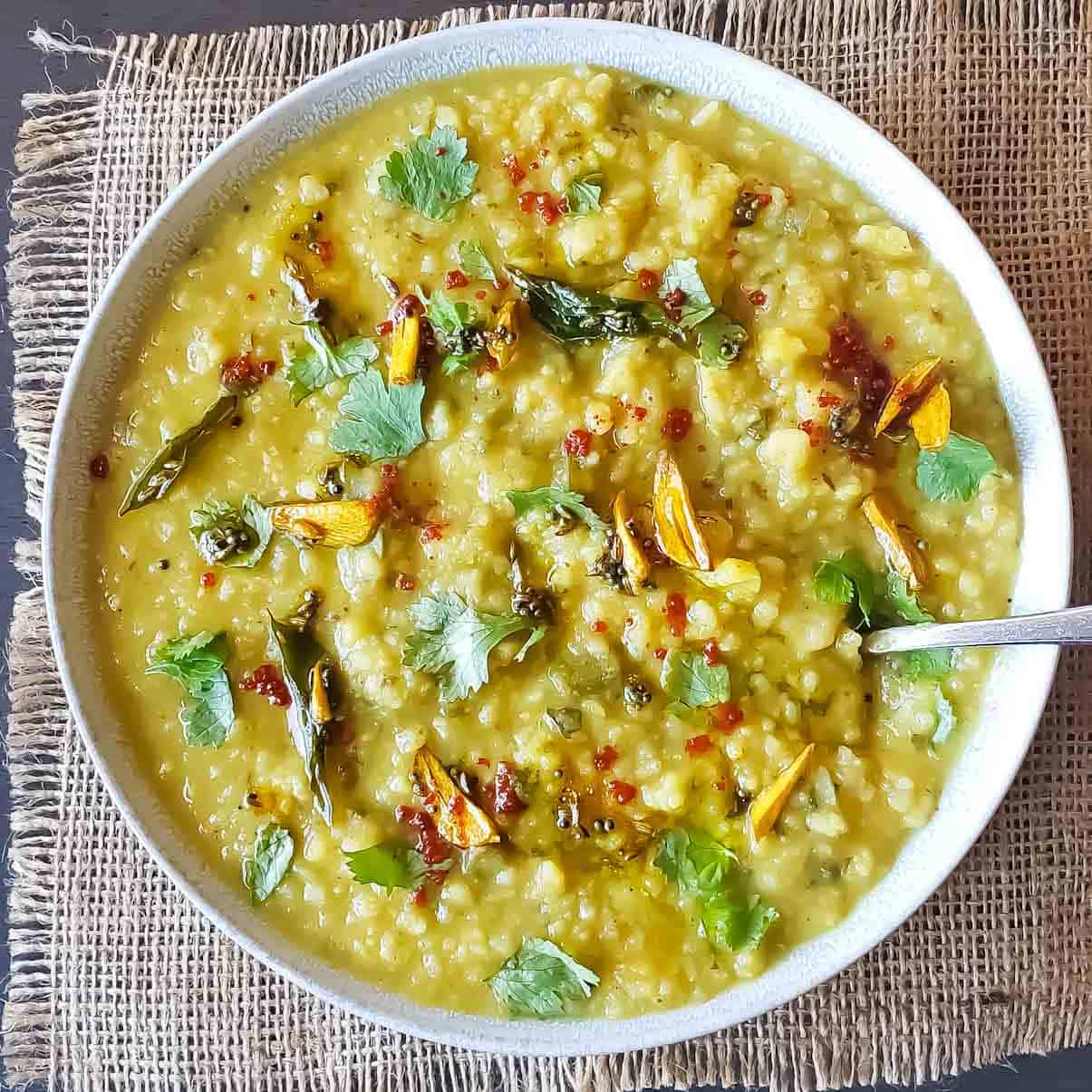
Khichdi is often misunderstood as “sick food” or something only eaten during illness.
But when prepared properly:
Khichdi can become one of the most practical meals for healthy eating and weight management.
The biggest strength of khichdi is simplicity.
Unlike heavily processed meals, balanced khichdi provides:
Warm comfort
Easier digestion
Stable fullness
Controlled calorie intake
Without making the body feel overloaded.
Many modern meals contain excessive oil, refined flour, and heavy sauces that increase calorie intake quickly while providing poor satiety.
A lighter homemade khichdi works differently.
Because it contains fiber, water, moderate carbohydrates, and protein together, it creates fullness more naturally and gently on digestion.
This version focuses on vegetables and balanced ingredients instead of excessive ghee or heavy tempering.
Ingredients
½ cup moong dal
½ cup brown rice or regular rice
1 small carrot (chopped)
½ cup bottle gourd (lauki)
½ cup peas
1 tomato (chopped)
½ teaspoon turmeric
1 teaspoon cumin seeds
Salt according to taste
1 teaspoon ghee or oil
Fresh coriander leaves
Optional Additions
Spinach
Capsicum
Beans
Ginger
Black pepper
How to Prepare
Wash rice and moong dal properly.
Heat a pressure cooker or deep pan with a small amount of ghee or oil.
Add cumin seeds.
Add vegetables and cook lightly for 2–3 minutes.
Add rice, dal, turmeric, salt, and water.
Cook until soft and well combined.
Garnish with coriander leaves and serve warm.
Total preparation time: around 30 minutes.
Why This Recipe Works
Moong dal provides plant protein while remaining relatively light on digestion.
Rice provides energy, while vegetables increase fiber and meal volume.
Because the recipe contains water-rich ingredients and fiber together, it supports fullness without becoming excessively calorie-dense.
The softer texture also makes digestion easier compared to many oily or processed meals.
Balanced khichdi can help reduce:
Overeating
Heavy nighttime meals
Digestive discomfort
Unnecessary snacking
When used consistently.
Best Time to Eat This
This recipe works best:
Dinner
Light lunch
Digestion recovery meal
Weight management meal
It is especially useful after periods of overeating or heavy restaurant food.
Common Mistakes to Avoid
Adding excessive ghee or butter
Using too much rice compared to dal and vegetables
Pairing with fried foods regularly
Balance is what keeps the meal healthier and lighter.
How to Make It More Filling
If you want stronger satiety, you can add:
Extra vegetables
Paneer cubes
Sprouts on the side
Salad accompaniment
This increases fiber and protein naturally.
Why Simple Meals Work Better Long Term
Many people fail diets because they chase extreme meal plans that are difficult to continue.
Simple homemade meals often work better because they:
Feel practical
Cost less
Improve consistency
Reduce food stress
Sustainable eating is usually more powerful than temporary perfection.
Conclusion
Weight-friendly meals do not need to be complicated or restrictive.
Simple traditional foods can support healthy eating very effectively when prepared properly.