
Introduction
If you feel sleepy at the wrong time, struggle to wake up in the morning, or experience low energy during the day, your biological clock is likely out of sync.
Most people ignore this problem. They blame work schedules, late nights, or lifestyle demands. But what they fail to realize is that their body is running on a natural timing system and when that system gets disrupted, it affects everything.
Your sleep, energy levels, digestion, mood, and even hormone balance depend on your biological clock functioning properly.
When it gets confused, your entire system starts to fall out of rhythm.
This is not just about poor sleep. It is a deeper issue that impacts your overall health.
Understanding the Body’s Natural Timing System
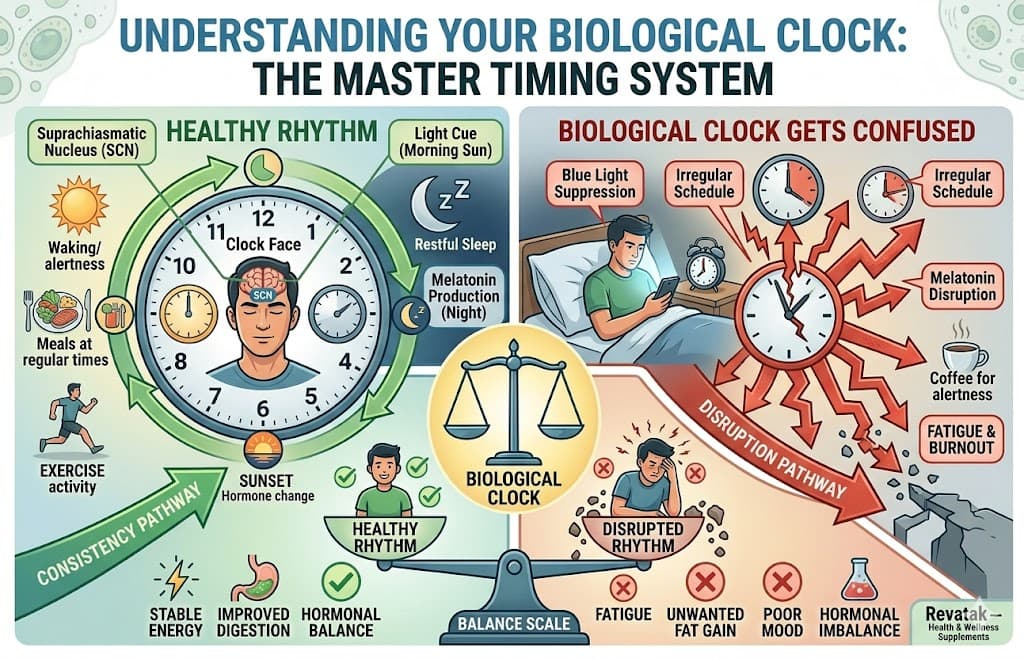
Your biological clock, also known as your circadian rhythm, controls when you feel awake and when you feel sleepy.
It is influenced by natural cues like light and darkness.
When the sun rises, your body signals you to wake up. When it sets, your body prepares for rest. This cycle is designed to keep your system balanced.
But modern lifestyles interfere with this natural rhythm.
Artificial lighting, late-night screen exposure, irregular schedules, and inconsistent sleep patterns confuse your body.
Instead of following a stable cycle, your internal clock becomes unpredictable.
How Daily Habits Disrupt Your Biological Clock
The biggest mistake people make is ignoring consistency.
Sleeping at different times every day confuses your system. Your body does not know when to release sleep hormones or when to boost energy levels.
Late-night screen exposure is another major factor. Blue light from devices suppresses melatonin, the hormone responsible for sleep.
This delays your body’s natural signal to rest.
Eating at irregular times also affects your internal clock. Your body expects food at certain times, and when that pattern is disrupted, it affects digestion and metabolism.
Shift work, late-night routines, and lack of sunlight exposure further worsen the problem.
These habits may seem normal, but they gradually disrupt your body’s natural timing.
Why a Confused Biological Clock Affects Your Energy
When your biological clock is misaligned, your energy levels become unstable.
You may feel tired during the day and alert at night. Even after sleeping, you may not feel refreshed.
This happens because your body is not following its natural rhythm.
Hormones that regulate energy and alertness are released at the wrong times, leading to fatigue and reduced productivity.
Over time, this affects your ability to function efficiently.
The Connection Between Sleep and Hormonal Balance
Your biological clock plays a key role in regulating hormones.
Sleep is the time when your body repairs itself, balances hormones, and restores energy.
When your sleep cycle is disrupted, this process is affected.
Hormones related to stress, appetite, and metabolism become imbalanced. This can lead to increased stress levels, irregular hunger patterns, and weight fluctuations.
Your body relies on a stable routine to maintain balance.
Without it, internal systems start to struggle.
How It Impacts Digestion and Metabolism
Your digestive system also follows a rhythm.
When you eat at consistent times, your body prepares itself to digest food efficiently.
But when your biological clock is confused, this process becomes irregular.
You may experience bloating, discomfort, or slow digestion.
Metabolism can also slow down, making it harder for your body to use energy effectively.
This is why irregular routines often lead to digestive issues and weight changes.
Why Mental Health Gets Affected
Your mental state is closely linked to your biological clock.
Disrupted sleep patterns affect brain function, making it harder to focus, stay calm, and manage stress.
You may feel irritable, anxious, or mentally exhausted.
This is not just psychological it is a result of your body being out of sync.
When your internal timing is stable, your mind functions more clearly and efficiently.
Why Quick Fixes Don’t Reset Your Body Clock
Many people try to fix their sleep with temporary solutions.
They rely on caffeine to stay awake or force themselves to sleep at certain times without changing their habits.
These approaches do not work long-term.
Your biological clock cannot be reset overnight.
It requires consistent signals over time.
Without changing your daily routine, your body will continue to stay confused.
Resetting Your Biological Clock Naturally
Restoring your biological clock starts with consistency.
Sleeping and waking up at the same time every day helps your body establish a stable rhythm.
Exposure to natural light in the morning signals your body to stay alert, while reducing screen time at night allows melatonin production to function properly.
Eating meals at regular intervals supports your internal timing and improves digestion.
Physical activity during the day helps regulate energy levels and promotes better sleep at night.
These changes may seem simple, but they are powerful when followed consistently.
Your body responds to patterns.
When you create the right patterns, your system begins to reset.
The Long-Term Benefits of a Balanced Biological Clock
When your biological clock is aligned, everything improves.
You wake up feeling refreshed. Your energy levels remain stable throughout the day. Your sleep becomes deeper and more restorative.
Your digestion improves, your mood stabilizes, and your overall health becomes stronger.
A balanced biological clock supports every system in your body.
Conclusion
When your biological clock gets confused, it affects far more than just your sleep.
It disrupts your energy, hormones, digestion, and mental well-being.
Ignoring it leads to long-term imbalance and reduced quality of life.
But the solution is within your control.
By creating consistent routines, improving your daily habits, and aligning your lifestyle with your body’s natural rhythm, you can reset your biological clock.
Your body is designed to function in balance.
Give it the right signals, and it will find its rhythm again.